Showing posts with label authors. Show all posts

Monday, January 21, 2019

Guest Post: Emotion Thesaurus Cover Reveal


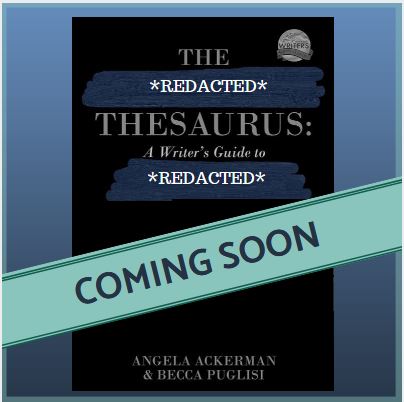
Have you ever held onto a secret you've been dying to share, and then finally...you can? For the last few weeks I've been helping Angela and Becca at Writers Helping Writers keep a BIG secret...what the next book in their thesaurus series will be. It might seem strange to not tell one's readers what book you're planning to release...unless you happen to write books on Show, Don't Tell like Angela and Becca do! They couldn't resist the opportunity to show, not tell, by waiting for the cover reveal. They even created a *REDACTED* cover for it, which you might have seen floating around.

We're revealing the cover at long last!

*drum roll*
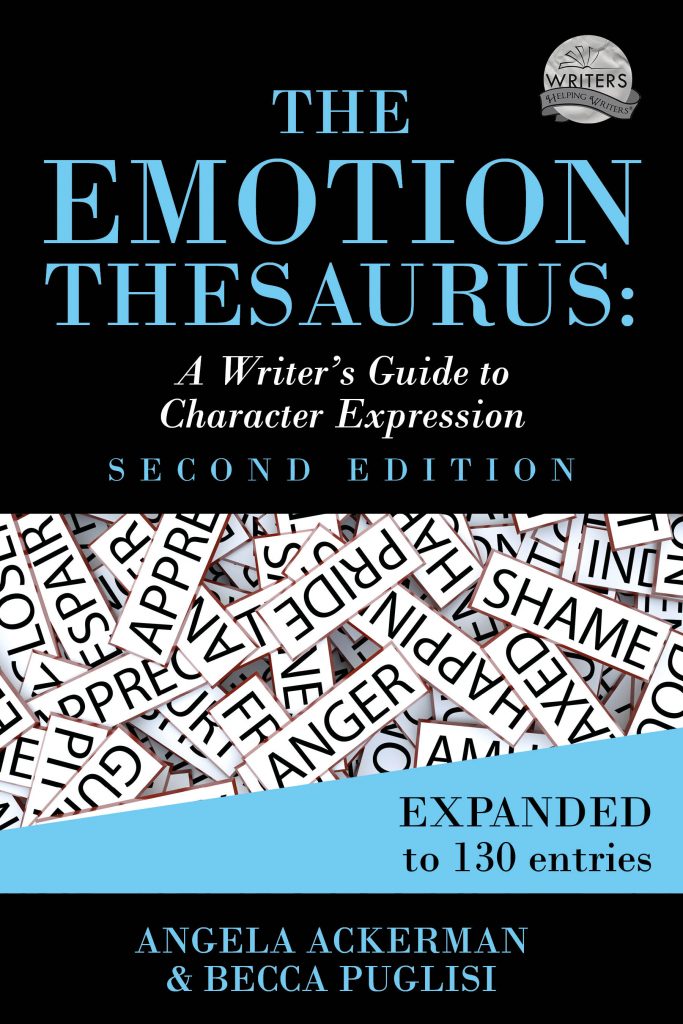

The next book in the descriptive thesaurus series is The Emotion Thesaurus Second Edition! It's been 7 years since the original Emotion Thesaurus hit the shelves. Many writers have credited this unusual book with transforming their writing. This guide is packed with helpful lists of body language, thoughts, and visceral sensations for 75 different emotions, which makes it easier for writers to convey what characters feel. Since 2012, many have asked the authors if they would add more emotions, so that's what Angela & Becca have done. This new edition has added 55 more emotions, bringing the total to 130. There are other new additions to the book and in fact, it's almost doubled in size! I recommend checking out the full list of emotions (and some sample entries) HERE. And more good news: this book is available for preorder! You can find it on Amazon, Kobo, iBooks, and Barnes & Noble.

Amazon: 
   https://amzn.to/2RVq42k
Kobo: 
   https://www.kobo.com/us/en/ebook/the-emotion-thesaurus-a-writer-s-guide-to-character-expression-2
Apple Books (iBooks): 
   https://itunes.apple.com/us/book/emotion-thesaurus-writers-guide-to-character-expression/id1449848058?ls=1&mt=11
Indiebound: 
   https://www.indiebound.org/book/9780999296349

Full Disclosure: The Amazon link is an affiliate link for the owner of this blog. If you purchase through that link, the blog owner may receive a small referral fee. If you prefer to purchase with a non-affiliate link, you are welcome to use this link instead: The Emotion Thesaurus, Expanded.

The other links may contain affiliate links that will provide Angela Ackerman and Becca Puglisi a small referral fee if you use them to purchase the book.

Thank you!

One last thing: go grab some free education!

Angela & Becca are giving away a free webinar recording of one of their popular workshops on Emotion, so head over if this is an area of struggle for you. It might really help!


From Lynn Nodima:


Hi, readers!

As a long-time user of Angela's and Becca's writer's thesauri (I love every book I have used), I was excited to be asked to help them launch their newly expanded book, The Emotion Thesaurus

Sometimes, writers need to get out of their heads to figure out how to write action in such a way that readers can understand the underlying tension without having to spell it out for them. Angela' and Becca's books are fantastic for that purpose. 

If you ever need to figure out what bodily action or reaction someone in a particular situation might display, this is the book for you.

I give this book my whole-hearted thumbs up!

Later,


Saturday, July 22, 2017

Fiction Writers and the Impostor Syndrome

Impostor Syndrome and the Fiction Writer

Today, while scanning Twitter, I noticed a tweet posted by a writer about feeling impostor syndrome.

That is the catalyst for this article. 

A Definition of Impostor Syndrome


Impostor syndrome (also known as impostor phenomenon or fraud syndrome or the imposter experience) is a concept describing high-achieving individuals who are marked by an inability to internalize their accomplishments and a persistent fear of being exposed as a "fraud".  Wikipedia


Who Experiences Impostor Syndrome?


Impostor syndrome affects a wide group of people. It includes almost anyone that achieves a goal for the first time. Especially if that goal is one seldom attained by other people.

For instance, the first time I felt impostor syndrome was after I earned my Bachelor’s Degree. My brother, sister, and I are first generation college graduates. We all felt it. It felt like someone would magically appear, say, “Sorry, we were just kidding!” and take our diplomas away from us. We kept waiting for, as my grandmother would have said, “The other shoe to drop.” It just got worse as we went forward to earn more degrees.

I’m not sure it ever truly goes away. To this day, I have trouble feeling like I earned my degrees, even with a 3.86 GPA. I’m not trying to brag. I want to demonstrate that this feeling is not dependent on how poorly or how well you do in achieving a goal. Impostor syndrome can still strike.

Impostor Syndrome and the Writer


Most people seem to think writers are more, or less, than other people. What I mean is that, depending on the kind of writer you are, there will be some who will put you on a pedestal, simply because you can write a basic sentence others can understand and enjoy. There will be others that look down their noses and believe you write because you can’t get a ‘real’ job.

Maybe, in some cases, they may all be right. I don’t know. I do know that a good fiction writer is someone who has spent a lot of time investing in knowledge of grammar, story techniques, dialogue, and much more. A good writer is a fantastic reader and loves to read a broad range of genres in both fiction and nonfiction. A good writer wants readers to open a book and be lost in a cinematic experience.

When said writer publishes for the first or hundredth time, and the book sells well, it may seem as if it can’t be true. This is impostor syndrome at its finest. You may feel as if people bought your book, but they couldn’t have enjoyed it. You may feel as if somehow, you fooled them into liking your work. It may be hard to internalize your success and believe in yourself.

Helps for Impostor Syndrome


The truth is, you can’t fool your public. If they purchase and like your books, if your books sell well, if you receive acclaim for your work, you are not an impostor.

Wikipedia (the bane of scholastic writers everywhere) has a good remedy for impostor syndrome.
·         Be kind to yourself
·         Seek support/ share your feelings
·         Do not use "just" and "only" when describing your work
·         Do not apologize for perceived mistakes

For the writer, I would include this: Keep writing. Your writing will improve every time you write a new book or short story. Over time, you should see this feeling for what it is: A self-belief that is limiting. While impostor syndrome is not a defined medical diagnosis, it is believed to affect approximately 70% of the world’s population. So, you’re not alone.

Follow the bullet steps above to prevent feelings of inadequacy and fear of new experiences. Don’t accept failure. Know that bad reviews can be for a variety of reasons.

Years ago, I worked in sales door-to-door. My manager gave me advice that applies to writing, as well. The advice? “Remember, you don’t know what’s going on in someone else’s life. If the door slams in your face, it might be that person is having a really rotten day. They may have a sick child, an argumentative spouse, or be miserable for any number of reasons. Don’t let them pass their bad day on to you. Shake it off. Put a smile on your face, and keep going. This is the way to success.”

When stress and self-doubt appear, use the emotions you feel to build a character. If it makes you feel better, have the character die in a horrendous manner. Don’t keep those feelings inside. Put them on paper. Even if you never show that particular piece of writing to anyone else, it will help you better deal with your emotions.

You can do this.

After all, you’re a writer.


Later,